Why Healthy Baking Swaps So Often Fail Even When the Ratios Are Technically Correct
Following a healthy baking substitution ratio exactly as printed — applesauce for oil, a specific gram-for-gram flour swap — still often produces a dense, gummy, or otherwise disappointing result, which is confusing when the ratio was technically followed correctly. Here is the specific chemistry a simple ratio swap ignores and how to actually adjust for it, per the why-your-healthy-baking-swaps-fail-guide logic.


Why a Single Failed Attempt Often Gets Blamed on the Whole Substitution Category
The overgeneralization trap: the one-disappointing-result-with-a-specific-ratio-often-gets-generalized-into-a-broad-this-swap-doesnt-work-conclusion (the one unsuccessful attempt at a specific ratio often getting generalized into a broader conclusion that the entire substitution category simply doesn’t work, rather than correctly diagnosed as a specific fixable adjustment issue — the one-unsuccessful-attempt-at-a-specific-ratio-often-getting-generalized-into-a-broader-conclusion-that-the-entire-category-doesnt-work), and the frame (the overgeneralization as treating one fixable ratio-adjustment problem as proof the whole substitution approach is unworkable — worth resisting since the actual fix is usually a small, specific adjustment rather than abandoning the swap entirely).

The Specific Chemistry a Simple Ratio Swap Ignores
What the ratio alone doesn’t account for: the fat-and-a-fat-substitute-serve-different-structural-roles-in-the-batter-beyond-just-moisture-content (the fat in a baked good serving real structural roles — tenderizing gluten development, carrying flavor, affecting texture — beyond simply contributing moisture, meaning a moisture-matched substitute like applesauce doesn’t automatically replicate fat’s other structural functions, per the healthy-baking-flour-swaps-guide logic — the fat-serving-real-structural-roles-beyond-moisture-like-tenderizing-gluten-and-carrying-flavor-means-a-moisture-matched-substitute-doesnt-automatically-replicate-those-other-functions), the the-different-flours-have-genuinely-different-protein-and-starch-structures-that-affect-gluten-development-and-liquid-absorption-differently (the alternative flours having genuinely different protein content and starch structure than standard wheat flour, affecting both how much gluten develops and how much liquid the flour actually absorbs, meaning a straight gram-for-gram swap can leave a batter with the wrong effective liquid ratio even at a technically correct total weight, per the gluten-free-flour-substitution-ratio-guide logic — the different-flours-having-genuinely-different-protein-and-starch-structures-affecting-both-gluten-development-and-liquid-absorption-means-a-straight-gram-for-gram-swap-can-leave-the-wrong-effective-liquid-ratio-even-at-a-technically-correct-total-weight), and the reframe (the ratio swap failing as a predictable result of a printed substitution ratio addressing only one variable — usually moisture or total weight — while ignoring the other structural and chemical roles the original ingredient was also serving).
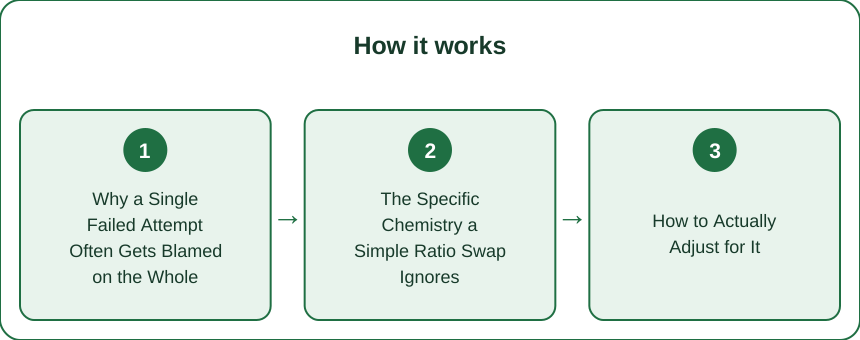
How to Actually Adjust for It
The practical corrections: the add-back-a-small-amount-of-a-genuine-fat-source-even-when-using-a-fat-substitute-rather-than-eliminating-fat-entirely (the retaining a small amount of actual fat alongside a fat substitute like applesauce, rather than eliminating fat entirely, preserving some of fat’s structural tenderizing role that the substitute alone doesn’t replicate, per the reduce-sugar-in-baking-guide logic — the retaining-a-small-amount-of-actual-fat-alongside-a-fat-substitute-rather-than-eliminating-fat-entirely-preserves-some-of-fats-structural-tenderizing-role-the-substitute-alone-doesnt-replicate), the the-adjust-liquid-quantity-based-on-the-specific-alternative-flours-known-absorption-behavior-rather-than-assuming-a-straight-swap (the researching or testing the specific alternative flour’s known liquid absorption tendency and adjusting the recipe’s liquid quantity accordingly, rather than assuming a straight gram-for-gram flour swap automatically preserves the correct batter consistency, per the healthy-baking-guide logic — the researching-the-specific-alternative-flours-known-absorption-tendency-and-adjusting-liquid-quantity-accordingly-rather-than-assuming-a-straight-swap-preserves-correct-batter-consistency), the the-make-partial-substitutions-rather-than-full-swaps-when-first-testing-a-new-substitution-to-isolate-what-actually-changes-the-result (the substituting only a portion of an ingredient rather than the full amount on a first attempt, making it easier to isolate exactly what the substitution changes about the result before committing to a full swap, per the how-to-make-your-baking-healthier-guide logic — the substituting-only-a-portion-rather-than-the-full-amount-on-a-first-attempt-makes-it-easier-to-isolate-exactly-what-the-substitution-changes-before-committing-to-a-full-swap), and the frame (the actual adjustment as retaining some real fat alongside a fat substitute, adjusting liquid quantity for the specific alternative flour’s known absorption behavior, and testing partial rather than full substitutions first — addressing the structural chemistry a simple printed ratio ignores rather than assuming the ratio alone guarantees a good result).
Healthy baking substitutions often fail even at a technically correct ratio because fat serves real structural roles in a batter beyond just contributing moisture — tenderizing gluten development, carrying flavor, affecting texture — that a moisture-matched substitute like applesauce doesn’t automatically replicate, and alternative flours have genuinely different protein content and starch structure that affect both gluten development and liquid absorption differently, meaning a straight gram-for-gram flour swap can leave a batter with the wrong effective liquid ratio even at a technically correct total weight. The fix is retaining a small amount of actual fat alongside any fat substitute rather than eliminating fat entirely, adjusting liquid quantity based on the specific alternative flour’s known absorption tendency rather than assuming a straight swap preserves correct consistency, and testing partial rather than full substitutions on a first attempt to make it easier to isolate exactly what the substitution changes about the result before committing to a full swap.
Keep Reading
This article is for general informational purposes only and is not medical advice. Always consult a qualified health professional for guidance specific to you.