Why Late Summer Fruit Ruins Your Reduced Sugar Baking
Quick Answer: Late summer fruit carries substantially more water and more sugar than the same fruit earlier in the season, and reduced-sugar recipes have no buffer for either. The extra water produces a gummy, underbaked center; the extra sugar means the recipe needs even less added sweetener than it says. Sugar is also doing structural work - moisture retention, browning and tenderness - so reducing it requires replacing those functions, not just the sweetness. The fixes are draining or pre-cooking the fruit, adjusting the flour, and understanding what sugar was doing besides tasting sweet.
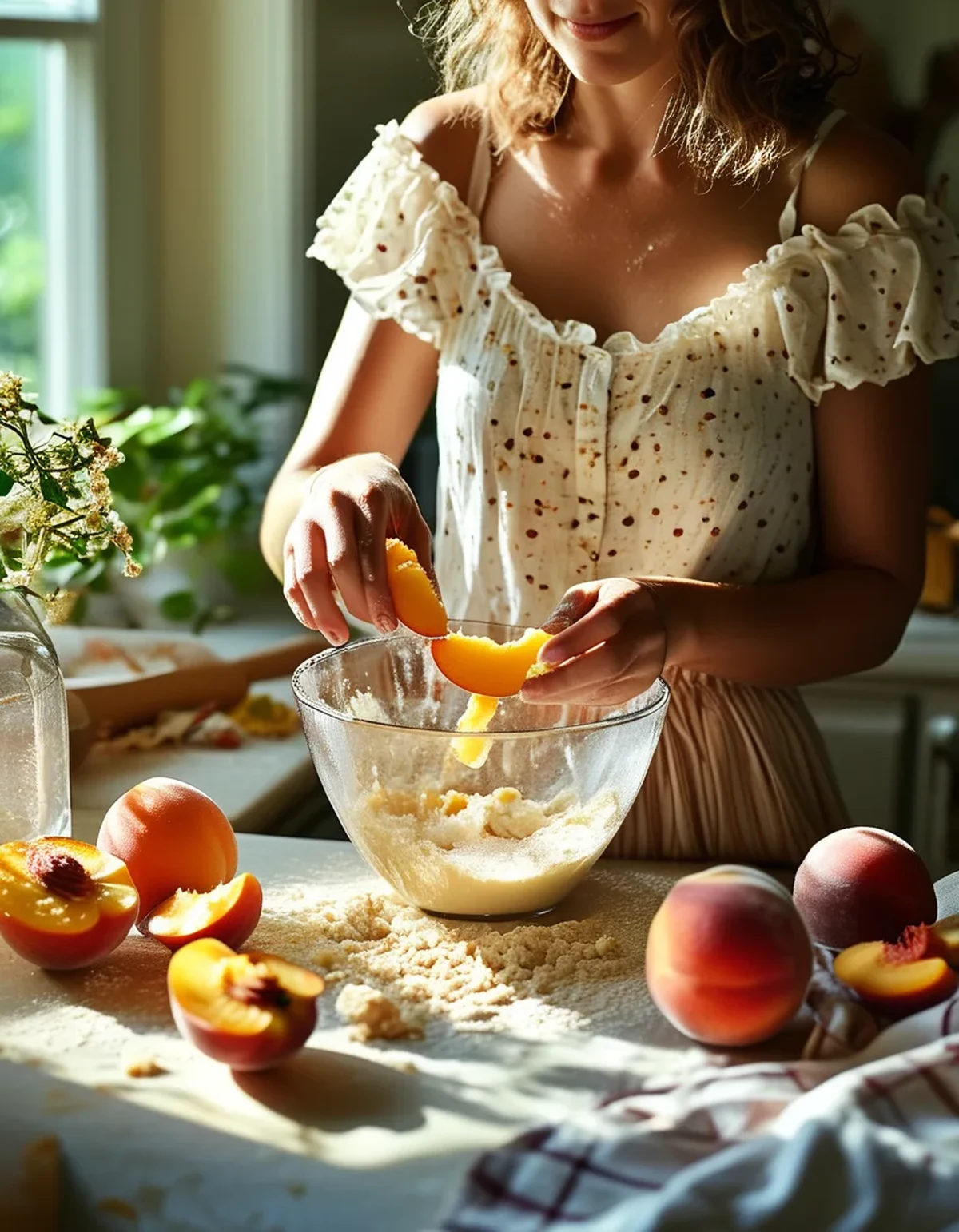
You made the same peach cake three times this summer. In June it was excellent. In late August the middle never set and the whole thing collapsed.
The recipe is fine. The peaches changed.

How much does the fruit actually change over a season?
Enough to break a recipe with no margin.
Fruit accumulates both water and sugar as it ripens. A peak-season peach in late August is meaningfully juicier than an early-season one, and it is also sweeter - the starches have converted and the sugar concentration has risen.
For standard baking this is mostly absorbed by the sugar and flour in the recipe. For reduced-sugar baking there is no buffer, because the whole point was to remove the excess.
The water is the bigger problem. Water released during baking has to evaporate or be absorbed, and if the batter cannot do either, the result is a gummy layer around the fruit and an underbaked center.
This is why the failure is always in the middle. The edges have enough heat and enough exposed surface for the water to leave; the center does not.
There is a variability problem too. Fruit from a farmers market in late August varies enormously in ripeness within a single basket, which means the same recipe made twice in a week gives different results. This is not a technique failure - it is genuine input variability, and the only real answer is to adjust to what you actually have rather than following a fixed quantity.
Weigh the fruit after preparation, not before. A recipe calling for two cups of chopped peaches is a very different amount of water depending on how juicy the peaches are.
What is sugar actually doing in the recipe?
Four jobs, and only one of them is sweetness.
It holds moisture. Sugar is hygroscopic - it binds water and keeps baked goods soft over days. Remove it and things go stale dramatically faster, which is why reduced-sugar baking often tastes fine on day one and dry on day two.
It browns. The Maillard reaction and caramelization both require sugar, and they produce the color and much of the flavor of a baked crust. Reduced-sugar bakes are visibly paler and taste flatter, and no amount of extra baking time fixes it - it just dries them out.
It tenderizes. Sugar interferes with gluten development and with protein coagulation, producing a softer crumb. Reducing it makes things tougher and more bread-like.
It provides structure through aeration. In creamed methods, the sharp crystals cut air into the fat - that aeration is a leavening mechanism. Replace granulated sugar with a liquid sweetener and you lose it entirely, which is why those substitutions produce dense results.
Understanding which job matters most for a given recipe tells you what to do. In a cake, the aeration and tenderizing matter most. In a cookie, the moisture and spread. In a muffin, the moisture and browning.
A reasonable rule: most recipes tolerate a reduction of about a quarter to a third of the sugar with minor adjustments. Beyond that you are changing the structure and need to compensate deliberately.
5 Reduced Sugar Baking Mistakes
1. Adding wet fruit straight into the batter. The most common failure. Toss chopped fruit in a tablespoon of the recipe’s flour before folding it in - the flour absorbs surface moisture and also stops the fruit sinking. For very juicy fruit, drain it in a colander for twenty minutes first, or roast it briefly to drive off water and concentrate flavor.
2. Swapping granulated sugar for a liquid sweetener one for one. Honey, maple syrup and agave all add liquid as well as sweetness. Reduce the other liquid by about a quarter cup per cup of liquid sweetener, and lower the oven by about 25F because they brown faster.
3. Not compensating for lost browning. A reduced-sugar bake is pale, and pale reads as underdone even when it is not. A small amount of molasses, or brushing the top with milk before baking, restores color without significant sugar.
4. Expecting the same shelf life. Less sugar means less moisture retention. Reduced-sugar baking should be eaten within a day or two, or frozen. Planning for that is easier than fighting it.
5. Reducing sugar and fat at the same time. Both are doing structural work, and removing both leaves nothing holding the crumb together. Change one variable per attempt, or the result is neither diagnosable nor good.
What actually works with late summer fruit?
Pre-cook it, and adjust the batter to the fruit you actually have.
Roasting is the best single technique. Halve or slice the fruit, roast at 400F for fifteen to twenty minutes until the edges caramelize and some liquid has cooked off. This concentrates the sugar so you need less added sweetener, removes the water that ruins the crumb, and adds flavor that reduced-sugar baking badly needs. It is one step and it solves three problems.
Or macerate and drain. Toss the fruit with a small amount of sugar or salt, leave for thirty minutes, and drain off the liquid. Reduce that liquid in a pan to a syrup and add it back - all of the flavor, none of the water.
Adjust the flour to what you see. If the batter looks looser than usual with the fruit in, add two to three tablespoons of flour or a tablespoon of ground almonds. This is judging by appearance rather than following a number, and it is the skill that makes seasonal baking work.
Bake longer at a lower temperature. Fruit-heavy batters need the center to reach temperature without the outside overbaking. Dropping 25F and adding ten to fifteen minutes is usually the right adjustment.
And test properly. A skewer into the center, avoiding the fruit - a skewer through a piece of fruit will always come out wet and tell you nothing. An instant-read thermometer reading around 200 to 205F in the center of a cake or quick bread is the reliable version.
FAQ: Reduced Sugar Baking Questions, Answered
How much sugar can I actually remove?
About a quarter to a third of the stated amount in most recipes with only minor changes to texture and browning. Beyond that, you need to compensate deliberately - adding an extra egg yolk for richness, using brown rather than white sugar for moisture, or reducing the baking time to preserve what moisture remains.
Do sugar alcohols and alternative sweeteners work in baking?
They work for sweetness and not for the other three functions. Erythritol and allulose behave differently from each other - allulose browns and caramelizes reasonably well, erythritol does not and can recrystallize into a gritty texture as it cools. Blends generally work better than any single substitute, and expecting a like-for-like result from any of them leads to disappointment.
Can I use frozen fruit instead to control the moisture?
Frozen fruit is actually wetter once thawed, because the ice crystals rupture the cell walls and release more liquid. Used from frozen without thawing, and tossed in flour, it works reasonably well in muffins and quick breads - and it is more consistent than late-summer fresh fruit, which is a genuine advantage if reproducibility matters to you.
TL;DR:
- Peak-season fruit carries far more water and sugar than early-season fruit, and reduced-sugar recipes have no buffer for either.
- Sugar does four jobs: moisture retention, browning, tenderizing and aeration. Only one is sweetness.
- Roast the fruit first - it removes water, concentrates sugar and adds flavor in a single step.
- Toss fruit in flour before folding in, and adjust the batter by appearance rather than by the stated quantity.
- Drop the oven 25F and add ten to fifteen minutes for fruit-heavy batters.
- Test with a skewer clear of the fruit, or use a thermometer at 200 to 205F.
The recipe did not stop working. The fruit got better, and better fruit is harder to bake with.
Keep Reading
This article is for general informational purposes only and is not medical advice. Always consult a qualified health professional for guidance specific to you.