The Reason Healthy Baking Swaps Always Come Out Drier Than the Original
Swapping in whole wheat flour, less sugar, or applesauce for oil almost always produces a drier result than the original recipe, and it’s not bad luck. Each of those swaps removes something that was doing real moisture work, and the fix is adding it back differently.


What Each Swap Actually Removes
The moisture science: the the-whole-wheat-absorbency-issue (whole wheat flour absorbing significantly more liquid than white flour due to its bran content, meaning a straight one-to-one swap under-hydrates the batter unless liquid is adjusted upward), the the-sugar-moisture-role (sugar doing real moisture-retention work in baked goods beyond sweetness, meaning a straight sugar reduction removes some of what kept the crumb moist, not just some of the sweetness), the the-oil-vs-applesauce-fat-gap (applesauce replacing oil’s volume but not its fat content, and fat is what coats flour proteins and slows moisture loss during baking, which applesauce doesn’t do the same way).

Why the Obvious Fixes Don’t Work
The common overcorrection: the the-just-add-more-liquid-fails (simply adding more liquid to compensate often producing a dense, gummy result rather than a moist one, since the issue is fat and structure, not just water content), the the-baking-longer-worsens-it (baking longer to fully cook a wetter batter actually drives out more moisture overall, worsening the exact problem it’s meant to solve), the the-single-swap-stacking-problem (stacking multiple healthy swaps in one recipe — less sugar, less fat, and whole wheat flour all at once — compounding the dryness effect well beyond what any single swap would cause alone).
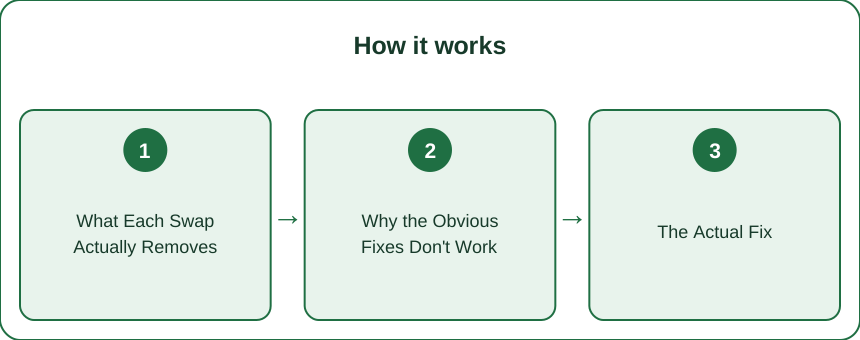
The Actual Fix
The correction: the the-partial-fat-replacement (replacing only half the oil with applesauce or another puree rather than the full amount, keeping enough real fat to preserve moisture retention), the the-add-back-a-binder (adding a small amount of yogurt, sour cream, or an extra egg yolk to reintroduce moisture-holding structure lost from reduced sugar or fat), and the frame (partial swaps that keep some real fat and sugar in the mix outperform full swaps that chase maximum health at the cost of texture)).
Healthy baking swaps come out dry so consistently that it’s clearly not bad luck — whole wheat flour absorbs meaningfully more liquid than white flour due to its bran content, sugar does real moisture-retention work beyond just sweetness, and applesauce replaces oil’s volume without replacing the fat that coats flour proteins and slows moisture loss during baking. The obvious fixes tend to backfire: adding more liquid without addressing fat produces a dense, gummy result, and baking longer to compensate just drives out more moisture. The actual fix is a partial swap — replacing only half the oil rather than all of it, and adding back a small amount of yogurt, sour cream, or an extra egg yolk to restore the moisture-holding structure that reduced sugar or fat took away. The Reason Healthy Baking Swaps Always Come Out Drier Than the Original comes down to fat and structure, not just sugar and flour.
Keep Reading
This article is for general informational purposes only and is not medical advice. Always consult a qualified health professional for guidance specific to you.