Why Your Healthy Baking Swaps Keep Turning Out Dry (The Fix Isn't More Liquid)
Quick Answer: Healthy baking swaps often turn out dry because alternative flours and reduced sugar both absorb or hold moisture differently than what they replaced. The fix is adjusting fat or liquid ratio to match the swap, not just adding more liquid blindly.
You followed the recipe exactly, just swapped white flour for almond flour and cut the sugar in half. Now it’s crumbly and dry, and “add more liquid” hasn’t fixed it.

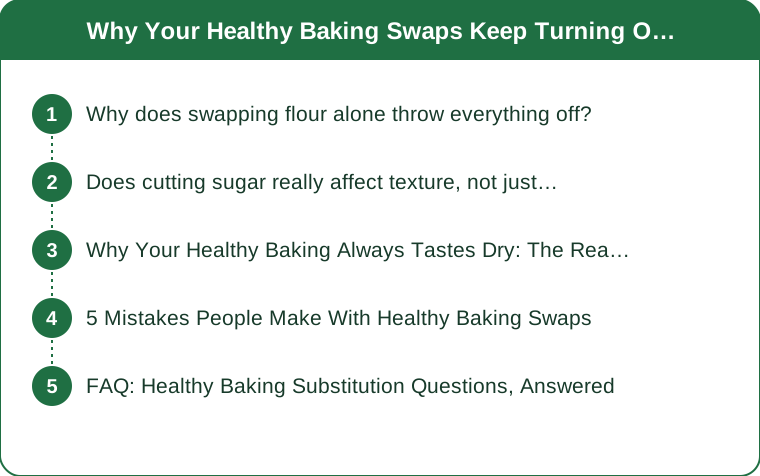
Why does swapping flour alone throw everything off?
Alternative flours absorb moisture at completely different rates than all-purpose flour — almond flour, for instance, has far less structural gluten and more fat content, which changes both texture and how much liquid the batter actually needs.
A 1:1 flour swap almost never means a 1:1 moisture ratio stays correct. Most alternative flours need either more liquid or more binding fat (like an extra egg or a bit of oil) to compensate for lost gluten structure.
Does cutting sugar really affect texture, not just sweetness?
Yes, more than most people expect. Sugar isn’t just for sweetness — it holds moisture in baked goods and affects browning. Cutting sugar significantly without adjusting anything else often means less moisture retention and a drier final texture, independent of the flour swap.
A 25-30% sugar reduction is usually the ceiling where texture holds up without other adjustments; beyond that, you generally need to add back moisture some other way, like extra applesauce or yogurt.

Why Your Healthy Baking Always Tastes Dry: The Real Fix
Adding more liquid isn’t usually the fix — adding more fat or a binding agent often is. Extra liquid without more fat can make a gummy, undercooked-tasting center rather than solving dryness, especially with almond or coconut flour.
A tablespoon of Greek yogurt, mashed banana, or unsweetened applesauce added to a swapped recipe often solves dryness better than water or milk alone, because it adds both moisture and fat-like binding without diluting flavor.
5 Mistakes People Make With Healthy Baking Swaps
1. Swapping flour and sugar in the same batch as a first test. Change one variable at a time so you know what’s actually causing the dryness.
2. Overbaking to compensate for a denser batter. Alternative flours often need slightly less bake time, not more — checking doneness 3-5 minutes early avoids overdrying.
3. Skipping the extra egg or binder. Lower-gluten flours often need one more egg than the original recipe to hold structure.
4. Not resting the batter before baking. Alternative flours, especially coconut flour, benefit from a 5-10 minute rest to fully absorb liquid before going in the oven.
5. Using coconut flour at a 1:1 ratio. This is the one that surprises people most — coconut flour absorbs so much liquid that it typically needs to replace only 1/4 to 1/3 of the original flour amount, not a full swap.
FAQ: Healthy Baking Substitution Questions, Answered
Can I fix a batch that already came out dry?
A simple syrup brush (honey or maple syrup thinned with a little water) brushed over the surface after baking can restore some moisture, though it won’t fully rebuild texture.
Which swap is most forgiving for beginners?
Oat flour tends to behave closest to regular flour in terms of moisture ratio, making it a gentler starting point than almond or coconut flour.
Does reducing sugar actually change how it bakes, not just tastes?
Yes — sugar affects browning and moisture retention, so a significant reduction can mean paler, drier results even with the same bake time.
TL;DR:
- Alternative flours absorb moisture differently — a straight 1:1 swap usually isn’t enough
- Cutting sugar over 25-30% often needs a moisture fix, not just less sweetness
- Extra fat or a binder (yogurt, applesauce) fixes dryness better than more liquid
- Coconut flour needs a fraction of the original amount, not a full swap
Dryness in healthy baking is almost always a ratio problem, not a lost cause — one targeted adjustment usually solves it.
Keep Reading
This article is for general informational purposes only and is not medical advice. Always consult a qualified health professional for guidance specific to you.