Why Cup Measuring Falls Apart the Moment You Swap Flours
Quick Answer: A cup measures space, not substance. All-purpose flour runs about 120g per cup, oat flour about 90g, almond flour about 96g, and coconut flour about 112g with roughly four times the absorbency. So when you swap cup-for-cup, you are quietly changing the flour-to-liquid ratio by 20-40%. A $12 kitchen scale fixes more healthy-baking failures than any other single change.
You followed the swap exactly. One cup out, one cup in. And the muffins came out squat and greasy, or dry enough to crumble on the way to your mouth.
Here is the frustrating part: the recipe wasn’t wrong and neither were you. The measuring cup was.
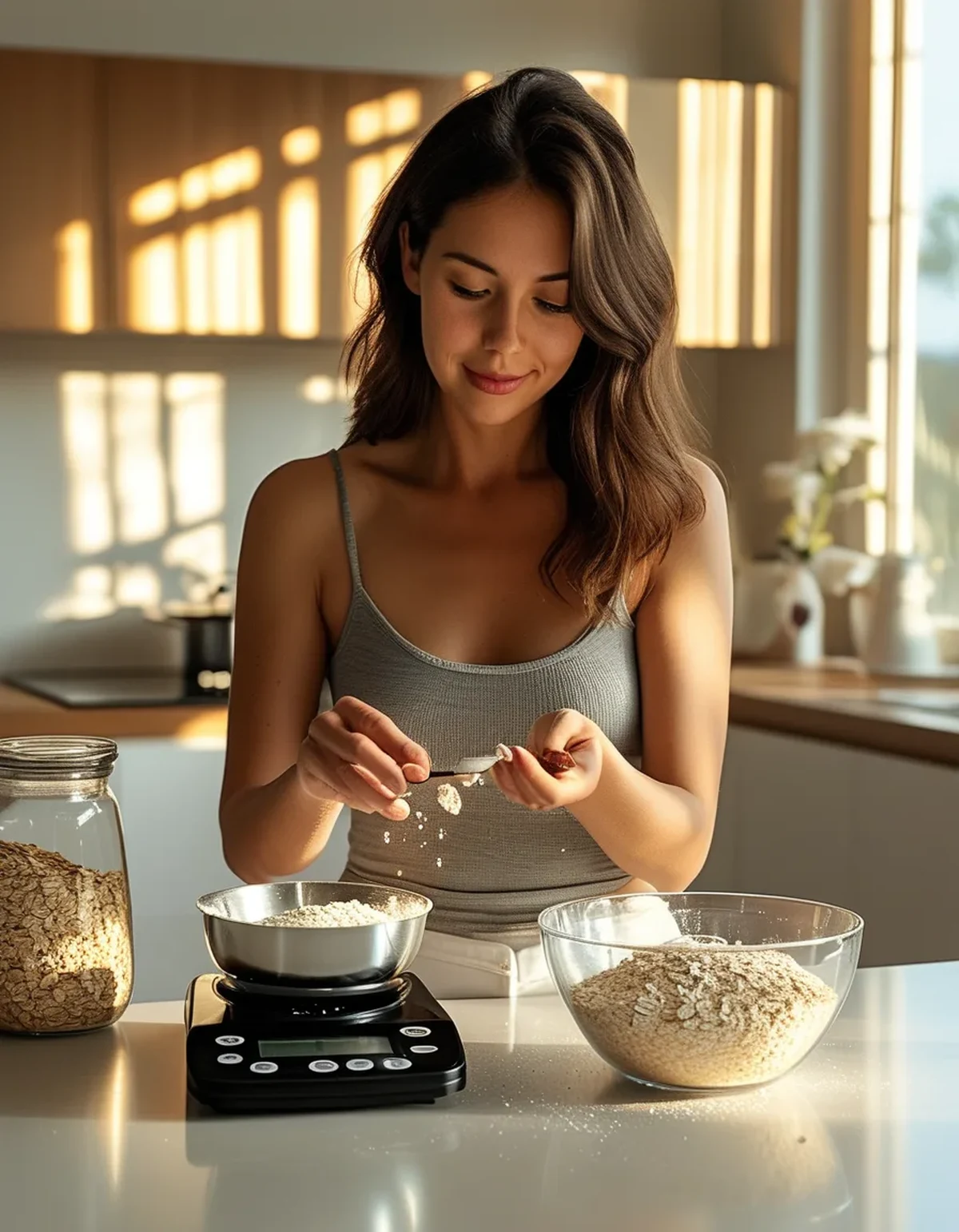
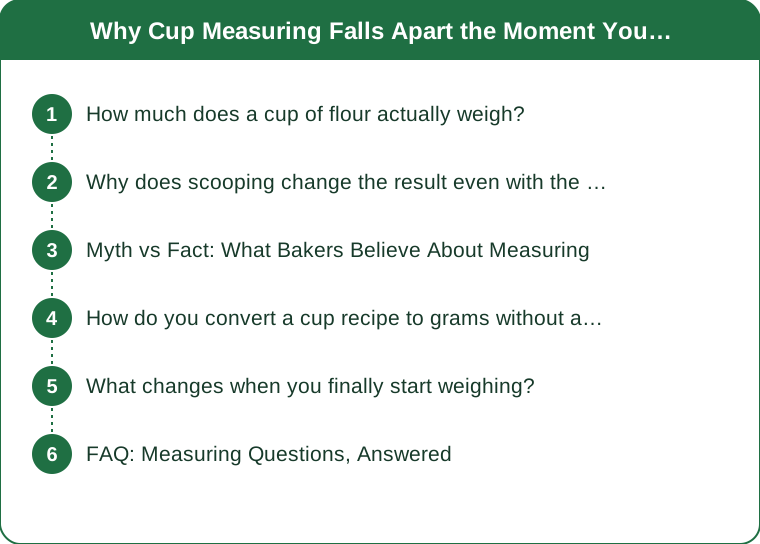
How much does a cup of flour actually weigh?
This is where most healthy baking goes sideways, and almost nobody checks it.
Weigh a cup of each and you get numbers that have no business being called the same amount:
- All-purpose flour: ~120g
- Whole wheat flour: ~130g
- Oat flour: ~90g
- Almond flour: ~96g
- Coconut flour: ~112g
- Protein powder (whey): ~30g per loosely packed cup
Swap all-purpose for oat flour cup-for-cup and you just removed 30 grams of dry material — a quarter of the structure — while leaving every drop of liquid in place. That batter is now far wetter than the recipe intends, which is exactly why oat-flour muffins sink and spread.
Go the other direction with coconut flour and you have both slightly more weight and a flour that drinks four times its own weight in liquid. Same cup, completely different recipe.
Why does scooping change the result even with the same flour?
Because you are not measuring flour. You are measuring how tightly you packed it.
Dip a cup straight into the bag and press, and you can pull 150g of all-purpose flour out of a vessel meant to hold 120g. That is 25% extra flour with no change to anything else in the bowl. Spoon it in loosely and level it, and you land near 120g.
So two people baking the same recipe from the same bag can be up to 30g apart before a single wet ingredient goes in. In a standard 12-muffin batch, 30g of extra flour is the difference between tender and chalky.
Humidity makes it worse. Flour stored in a humid August kitchen holds more moisture and settles differently than the same flour in a dry October one — which is a good part of why a recipe that behaved in summer stops behaving in fall.
Myth vs Fact: What Bakers Believe About Measuring
Myth: A cup is a cup. Measuring is measuring. Fact: A cup is a volume. Baking is chemistry, and chemistry runs on mass. Every professional recipe developer works in grams for exactly this reason.
Myth: Leveling with a knife makes cup measuring accurate. Fact: Leveling fixes the top of the cup. It does nothing about how compressed the flour underneath is. Leveling narrows the error from ~30g to ~15g — better, not solved.
Myth: Small differences don’t matter in a forgiving recipe like banana bread. Fact: Banana bread is the recipe that exposes it most, because it is already high-moisture. Ten extra grams of a thirsty flour is the difference between a clean center and a sunken one.
Myth: Liquid measuring is fine by volume, so dry should be too. Fact: Liquid can’t be compressed. That is the entire difference. A cup of water is 236g every single time; a cup of flour is a range.
Myth: A scale is one more thing to wash. Fact: You weigh straight into the mixing bowl using the tare button. A scale means fewer dishes, not more — most days it replaces three measuring cups.
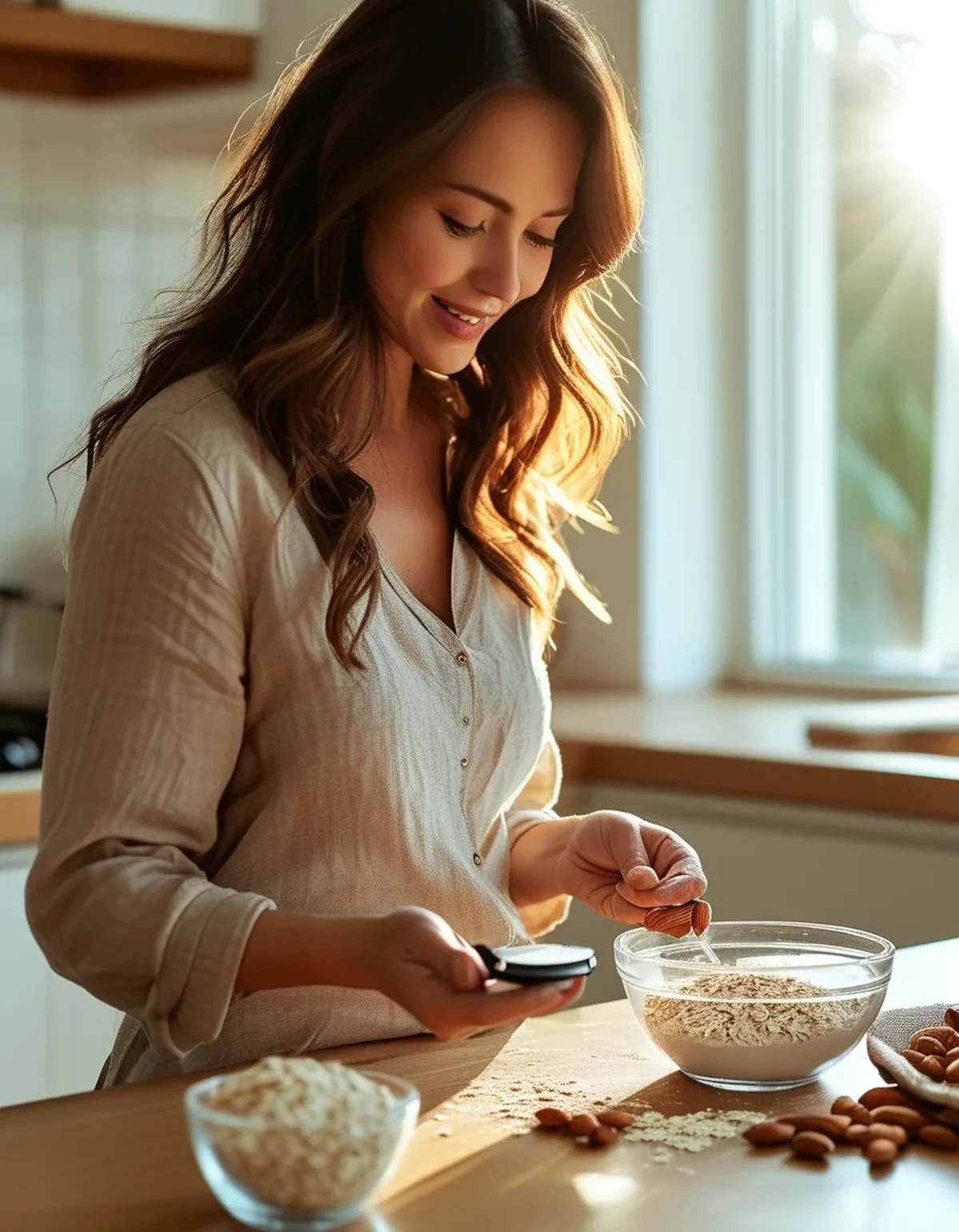
How do you convert a cup recipe to grams without a test bake?
You don’t need to guess and you don’t need to bake twice. Do this once per recipe:
Step 1 — Pin the original. Assume the recipe writer used 120g per cup of all-purpose. That is the standard US convention and it’s right far more often than not. Two cups of flour = 240g of dry structure.
Step 2 — Match the weight, not the cups. If you’re swapping to oat flour, use 240g of oat flour, not two cups. You’ll notice that’s closer to 2⅔ cups by volume — which is precisely the amount cup-for-cup swapping was cheating you out of.
Step 3 — Adjust for absorbency, but only for the thirsty ones. Almond and oat flour match weight-for-weight. Coconut flour does not: use 25-30% of the original weight (so 240g of all-purpose becomes about 65g of coconut flour) and add one extra egg per 30g of coconut flour.
Step 4 — Rest the batter 10 minutes. Alternative flours hydrate more slowly than wheat. A batter that looks alarmingly thin right after mixing often reads perfectly at ten minutes. Judging too early is what makes people add flour they didn’t need.
What changes when you finally start weighing?
The first thing most people notice is boring, and that is the point: the same recipe gives the same result twice.
The second thing is that troubleshooting suddenly works. When every batch is a slightly different recipe, you can’t learn anything from a failure — you have no idea what actually changed. Once the weights are fixed, a dry bake tells you something real about oven temperature or bake time, and you can chase it.
Practical notes for the switch:
- Buy a scale that reads in 1g increments and holds at least 5kg. Under $15 is fine.
- Use the tare button between ingredients and weigh everything into one bowl.
- Write the gram weights in the margin of recipes you repeat. After a few bakes you’ll stop reaching for cups entirely.
- Keep one cup measure for things where precision genuinely doesn’t matter, like folding in berries.
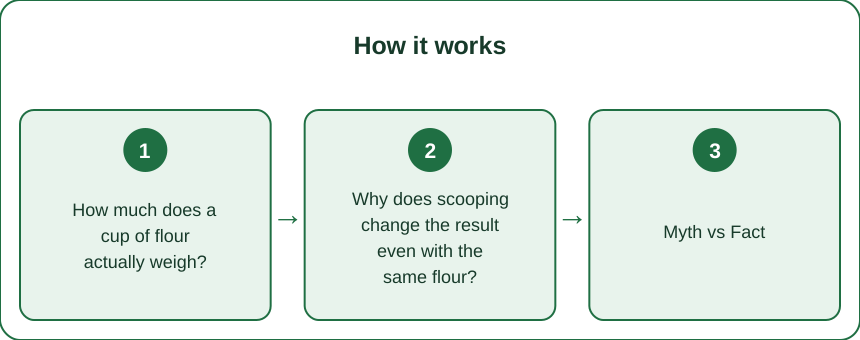
FAQ: Measuring Questions, Answered
Do I need to weigh liquids too?
Not really — liquids can’t be compressed, so a liquid measuring cup is already accurate. That said, weighing them is often faster since it all goes into the same bowl with the tare button. Water, milk, and most plant milks run about 236g per cup.
My recipe only gives cups. How do I know what the writer meant?
Assume 120g per cup of all-purpose flour unless the recipe says otherwise. If your first bake at that assumption comes out slightly dry, the writer was probably a scooper — drop to 115g next time and it will land.
Does this apply to sugar substitutes as well?
Very much so, and it catches people off guard. Erythritol blends measure close to sugar by volume but weigh differently, and allulose is roughly 70% as sweet by weight. Check the package for a gram equivalence rather than trusting the cup line.
TL;DR:
- A cup measures volume, but baking runs on mass — and alternative flours vary by 30-40g per cup.
- Cup-for-cup swaps quietly change your flour-to-liquid ratio by 20-40%, which is the real cause of sunken, greasy, or chalky healthy bakes.
- Convert by weight instead: assume 120g per cup of all-purpose and match that number with your substitute.
- Coconut flour is the exception — use 25-30% of the original weight plus an extra egg per 30g.
None of this makes healthy baking harder. It makes it repeatable, which is the thing that was actually missing. Weigh your next batch, write the numbers in the margin, and you’ll spend the rest of the fall improving recipes instead of re-guessing them.
Keep Reading
This article is for general informational purposes only and is not medical advice. Always consult a qualified health professional for guidance specific to you.