Why Whole Wheat Baking Tastes Bitter — and the Three Fixes
Quick Answer: Bitterness in whole wheat baking comes from three sources: rancid wheat germ oil in flour that has been stored too long, phenolic compounds in the bran that read as tannic when underhydrated, and over-mixing that develops harsh gluten notes. Buy flour in small quantities and refrigerate it, soak the flour in the recipe’s liquid for 20 to 30 minutes before mixing, and stop mixing the moment the flour disappears.
The flour is not supposed to taste like that, and the difference between fresh and stale whole wheat is not subtle once you have noticed it.

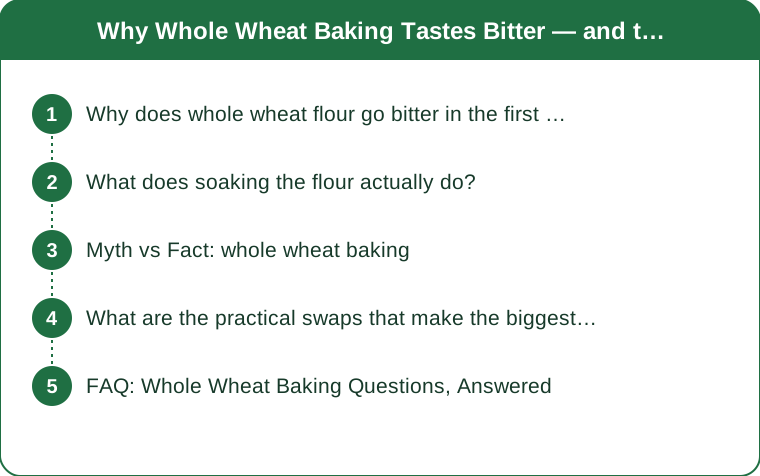
Why does whole wheat flour go bitter in the first place?
Because it contains fat, and fat goes rancid.
White flour is the endosperm alone — essentially starch and protein, and shelf-stable for a year or more. Whole wheat flour includes the germ, which contains oil, and the bran, which contains enzymes. That oil begins oxidizing from the moment the grain is milled, and the resulting compounds taste bitter and faintly like cardboard or old nuts.
The timeline is shorter than most people assume. Whole wheat flour stored at room temperature in a paper bag holds good flavor for roughly one to three months. Past that it does not spoil in a way that makes you sick, it simply gets progressively more bitter, and the change is gradual enough that regular users stop noticing it.
A test that takes five seconds: smell the flour, then taste a pinch dry. Fresh whole wheat is sweet, grassy and slightly nutty. Rancid whole wheat smells faintly like old paint or crayons and has a sharp finish. If you have only ever tasted the second one, the bitterness you have been attributing to healthy baking is just age.
Storage changes everything. Refrigerated, whole wheat flour holds well for around six months; frozen in an airtight container, closer to a year. Buy smaller bags more often rather than a large sack that lives in a warm pantry.
What does soaking the flour actually do?
It hydrates the bran, and hydrated bran tastes different from dry bran.
Whole wheat bran is sharp-edged and absorbs water slowly. When you mix a batter and bake it immediately, the bran is still partially dry going into the oven, so it keeps pulling moisture from the crumb during baking. The result is the dryness people associate with whole wheat — and dryness amplifies perceived bitterness considerably.
The technique, sometimes called an autolyse or a soaker: combine the whole wheat flour with the liquid from the recipe — milk, buttermilk, water, yogurt — and let it sit 20 to 30 minutes before adding anything else. For a denser bread dough, an hour is better.
What changes:
- The bran softens and stops feeling gritty.
- The crumb holds noticeably more moisture.
- Enzymes in the flour begin breaking a small amount of starch into simple sugars, which reads as sweetness and directly offsets the bitter notes.
Where it matters most: muffins, quick breads, pancakes and anything with 100 percent whole wheat. In a recipe that is only 25 percent whole wheat, the effect is real but smaller.
One caution: do not include baking soda or baking powder in the soak. Leaveners activate on contact with liquid and acid, and 30 minutes of soaking spends most of the lift before the batter reaches the oven. Add them with the remaining dry ingredients afterwards.

Myth vs Fact: whole wheat baking
Myth: Whole wheat baked goods are supposed to taste bitter and dense.
Fact: Fresh whole wheat flour, properly hydrated, tastes sweet and nutty. Bitterness is a defect, not a characteristic, and most people have only ever tasted the defective version.
Myth: You can substitute whole wheat for white flour one for one.
Fact: Whole wheat absorbs more liquid. Substituting directly gives you a dry result. Add roughly 2 teaspoons of extra liquid per cup of whole wheat flour swapped in, and expect to adjust further based on the batter.
Myth: White whole wheat flour is a processed compromise.
Fact: It is a whole grain flour milled from a different wheat variety — hard white wheat rather than hard red. It contains the same bran and germ, and the same fiber and nutrients, but the bran is lighter in color and much lower in the phenolic compounds that read as bitter. For anyone struggling with the flavor, it is the single easiest change available.
Myth: More mixing makes a better whole wheat crumb.
Fact: The opposite. Whole wheat develops gluten differently because sharp bran particles physically cut gluten strands, so extra mixing produces toughness rather than structure. Mix quick breads and muffins until the flour just disappears, and no further.
Myth: Bitterness means the recipe needs more sugar.
Fact: Sugar masks it temporarily and adds nothing else. Fixing the flour, hydration and mixing removes the bitterness rather than covering it, and usually lets you keep the sugar reduction you were aiming for.
What are the practical swaps that make the biggest difference?
Five changes, roughly in order of impact per unit of effort.
1. Switch to white whole wheat flour. Same whole grain nutrition, dramatically less of the tannic edge. This alone solves the problem for a lot of people, and requires changing nothing else about the recipe.
2. Start at 50 percent, not 100 percent. Replace half the white flour and see how the recipe behaves. Many recipes take 50 percent whole wheat with almost no adjustment, and the flavor and texture penalty is minimal. Working up from there gives you a reference point.
3. Pair it with an acidic liquid. Buttermilk, yogurt or kefir do two things at once — the acid softens bran and the tang balances residual bitterness. This is why so many good whole wheat muffin recipes call for buttermilk.
4. Add a flavor that belongs with wheat. Molasses, honey, brown butter, cinnamon, orange zest and toasted nuts all complement whole wheat rather than fighting it. A tablespoon of molasses in a whole wheat loaf does more than an extra quarter cup of sugar.
5. Toast the flour for nutty rather than bitter. Spread whole wheat flour on a sheet pan at 350°F for about 8 to 10 minutes, stirring once, and cool it completely before using. This deepens the nutty character considerably. Note that it also reduces gluten-forming capacity, so use toasted flour for a portion of the total rather than all of it.
Humidity note for right now: late summer air holds a lot of moisture, and flour stored in it absorbs some. If your batter is looser than usual with the same recipe you used in February, that is why — hold back a tablespoon or two of liquid and add it back if needed.
FAQ: Whole Wheat Baking Questions, Answered
Can I freeze whole wheat flour and use it straight from the freezer?
Yes for most baking, but let it come closer to room temperature for yeasted doughs, where cold flour slows fermentation noticeably. For muffins and quick breads it makes essentially no difference.
Does whole wheat pastry flour solve the problem?
Partly. It is milled from soft wheat, so it is lower in protein and gives a tenderer crumb — good for muffins, cakes and biscuits. It still contains the germ and bran, so the freshness and storage rules apply exactly the same.
Why do my whole wheat cookies spread less than white flour ones?
Because the flour absorbs more of the liquid and fat, leaving less free to loosen the dough in the oven. Add a tablespoon or two of extra liquid, or let the dough rest 30 minutes so hydration evens out before baking.
TL;DR:
- Bitterness usually means rancid germ oil — buy small bags, store in the fridge or freezer, and smell before using.
- Soak whole wheat flour in the recipe’s liquid for 20 to 30 minutes, holding back the leaveners.
- White whole wheat flour is the same whole grain with far less of the tannic edge.
- Add about 2 teaspoons of extra liquid per cup swapped in, and stop mixing when the flour disappears.
- Buttermilk, molasses, brown butter and toasted nuts complement wheat; more sugar just masks it.
Fresh whole wheat is sweet and nutty. If yours is not, the problem is the bag rather than the grain.
Keep Reading
This article is for general informational purposes only and is not medical advice. Always consult a qualified health professional for guidance specific to you.