Baking Smarter with Less Sugar: The Reduction Techniques That Keep the Joy
Sugar in baking isn’t just sweetness — it’s moisture, browning and structure — which is why the halved-sugar experiment sometimes disappoints. The smart-reduction guide: what sugar actually does, how far each recipe can drop and the amplifiers that make less taste like enough.

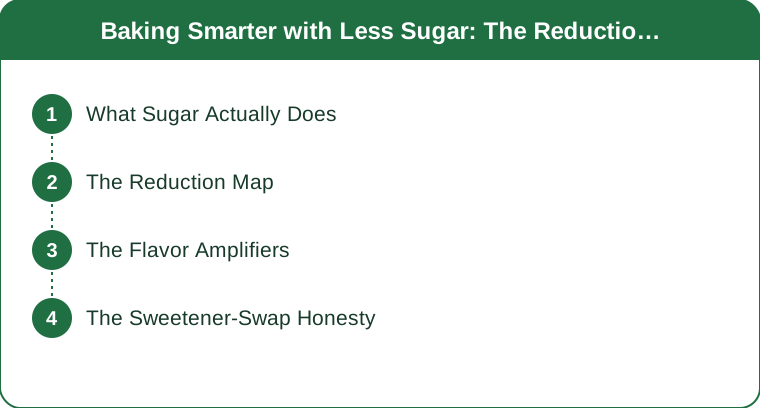
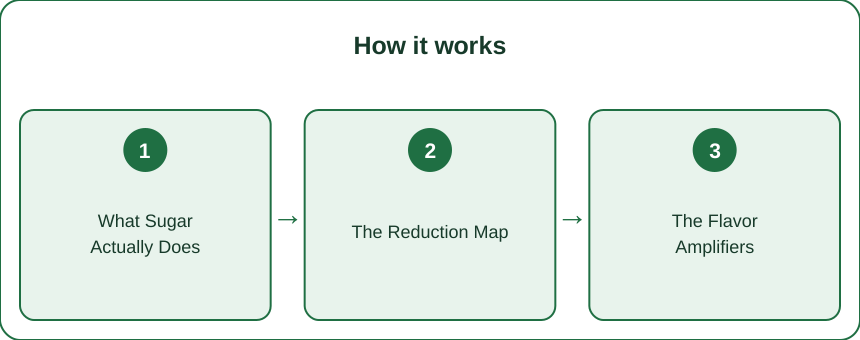
What Sugar Actually Does
The jobs beyond sweet: the moisture role (sugar holds water — reduced-sugar bakes dry faster and stale sooner; the reduction that skips a moisture counterweight bakes tomorrow’s disappointment), the browning chemistry (caramelization and the golden crust — the pale reduced-sugar bake is the visual tell), the structure contribution (sugar tenderizes by interfering with gluten — the tougher crumb of aggressive reductions), and the reduction implication (sugar cuts work WITH compensations — the techniques below; the naive halving works in some formats and fails in others, and knowing which is the skill).
The Reduction Map
Recipe by recipe, how far: the forgiving tier (muffins, quick breads, pancakes and crumbles — the 25-40% reduction that most palates don’t notice; the fruit-heavy formats where produce carries sweetness; the everyday bakes where the reduction habit lives), the moderate tier (cookies and simple cakes — the 20-25% cut with a moisture escort; the browning and spread change subtly, acceptably), the respect tier (meringues, caramel and the structure-dependent classics — sugar IS the architecture; reduce elsewhere), and the recalibration bonus (the no-sugar-challenge chapter’s finding applies — palates adjust within weeks; the 30% reduction that tasted austere in March tastes normal by May, and the original recipe tastes like frosting).

The Flavor Amplifiers
Making less taste like more: the vanilla-and-spice lever (vanilla, cinnamon and cardamom read as sweetness — the perceived-sweetness boosters that cost no sugar; the doubled vanilla in a reduced-sugar bake is the classic compensation), the salt paradox (the pinch that makes sweetness pop — under-salted bakes need more sugar to taste like anything; the flavor chapter’s oldest trick), the fruit concentration (ripe bananas, dates and applesauce bringing sweetness plus moisture — the double-job swaps that solve both problems; the roasted-fruit intensification tier), the acid brightener (the lemon zest and yogurt tang that make flavors vivid — bright reads sweeter than flat), and the texture-and-temperature note (warm bakes taste sweeter than cold — the served-warm reduced-sugar crumble outperforms its cold self).
The Sweetener-Swap Honesty
The alternatives, fairly: the honey-and-maple tier (still sugar metabolically — the flavor upgrade and the modest reduction from higher perceived sweetness; the swap that’s about taste, not health arithmetic), the non-nutritive question (the baking-stable options exist and bake differently — the bulk and browning sugar provided goes missing; the blend approaches work better than full swaps; the aftertaste tolerance is personal), the fruit-sweetened tier (the date-paste and banana bakes — the whole-food route with the fiber included; the flavor commitment that suits some recipes and hijacks others), and the perspective clause (the home bake at 30% less sugar remains a treat, enjoyed as one — the healthy-baking goal was a better treat, not a virtuous non-treat; the joy is a required ingredient, per the whole chapter). Cut a quarter, double the vanilla, add the pinch: sweetness, engineered smarter.
Sugar does three jobs, cut 25-40% in forgiving formats, amplify with vanilla-salt-spice, palates recalibrate in weeks. Smart reduction keeps the joy — the techniques do what the sugar did.
Keep Reading
This article is for general informational purposes only and is not medical advice. Always consult a qualified health professional for guidance specific to you.