Little Sous Chefs: Baking Healthy With Kids (Chaos Included)
Quick Answer: Bake with kids using recipes that survive enthusiasm — banana oat muffins, three-ingredient cookies, energy balls and yogurt bark. Match jobs to age (toddlers mash and pour, school-age kids measure and crack eggs, tweens run whole recipes), and agree the mess rules before the flour comes out. Kids who help make food are far more likely to eat it, vegetables included.
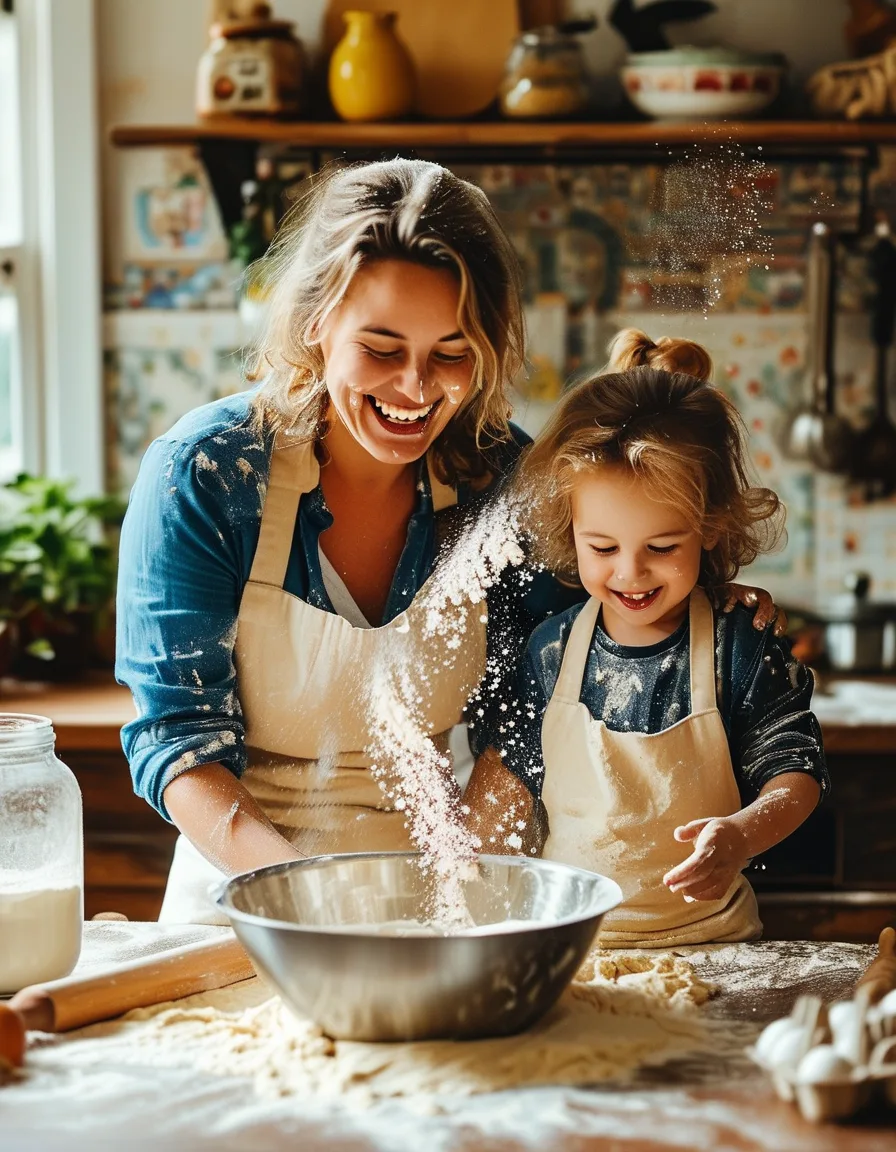
Baking with children is roughly 30% baking, 70% chaos management, and 100% worth it.
The reason isn’t sentimental. Kids who participate in preparing food consistently show more willingness to try it — the muffin a four-year-old grated the zucchini into gets eaten by that same four-year-old, zucchini and all, with no negotiation whatsoever.
Healthy baking with small sous chefs just needs two things: recipes that forgive, and a mess treaty signed in advance.
Which Recipes Actually Survive Kids Helping?
The ones where enthusiasm can’t break the chemistry. Anything that depends on precise measurement, careful folding or not-overmixing will end badly and take the mood with it.
Banana oat muffins. Blender batter — bananas, oats, eggs, a little baking powder, whatever add-ins. There is no way to over-stir a blender. Bake 18–20 minutes at 350°F.
Three-ingredient cookies. Mashed banana, oats, and a handful of something (raisins, chocolate chips, chopped nuts). Mashing is a job description a three-year-old will take extremely seriously.
Energy balls. Oats, nut butter, a sticky sweetener, seeds. Rolling is toddler-certified work, and nothing goes in an oven.
Yogurt bark. Spread thick Greek yogurt on a lined tray, decorate with fruit, freeze 2–3 hours. The decorating is the recipe, which is exactly the ratio kids want.
Oat-based pancakes or waffles. Forgiving batter, immediate payoff, and pouring is a genuinely satisfying job.
What to avoid with young helpers: laminated doughs, meringues, anything creamed at a precise temperature, and any recipe where you’ll be tense. Your tension is the actual ingredient that ruins the session.
What Jobs Should Kids Do at Each Age?
Age-matched tasks keep hands busy and fingers attached.
Toddlers (2–3): mashing, pouring pre-measured ingredients, stirring (loosely defined), sprinkling toppings, pressing cookie cutters, rolling energy balls. Best done standing at a learning tower or a chair you’re actually supervising.
Preschool (4–5): measuring with your hand on the cup, greasing tins, peeling bananas, sprinkling, whisking dry ingredients, setting the timer.
School-age (6–9): reading the recipe aloud, measuring independently, cracking eggs over a separate small bowl (the shell-fishing station, and it saves the whole batch), operating a blender with supervision, using the oven with you at the door.
Tweens (10+): running a whole recipe with you as sous chef. Genuinely the goal — ownership is the appetite trick, and independence is the life skill.
Rule of thumb: give the job that’s slightly harder than they can comfortably do, and stay next to them. That’s where the pride comes from.

Does Baking With Kids Really Make Them Eat Better?
It genuinely helps, and the mechanism is participation rather than persuasion.
A child who grated the carrot, cracked the egg and pushed the button has a relationship with the muffin that no amount of “just try one bite” can create. Presentation doesn’t launder a vegetable; involvement does.
The easy entry points:
- Zucchini and carrot into muffins and quick breads — moisture plus produce, undetectable.
- Banana and apple sauce replacing some sugar and fat, which is genuinely useful nutritionally.
- Spinach into smoothie-muffins — the colour is the fun part for kids, not the objection.
- Oats replacing some flour for fibre, with no texture cost in the recipes above.
- Pumpkin purée into anything spiced.
Keep the framing neutral. “This has vegetables in it, isn’t that clever” works better than “this is healthy,” which for a lot of kids translates as a warning label.
How Do You Survive the Mess?
Negotiate the terms before the flour is open.
Aprons on — not for the clothes, but because putting on an apron is a start signal, and kids respond to ritual.
One flour incident forgiven per session. Naming this in advance takes the drama out of it when it happens, which it will.
Contain the work zone. A rimmed baking tray under the mixing bowl catches an astonishing percentage of the chaos. So does a damp towel under the bowl to stop it travelling.
Cleanup is part of baking. Framed as the finale rather than a punishment, small hands wipe counters surprisingly well. A spray bottle of water and a cloth is, for reasons no one can explain, a treat.
The baker eats first. Non-negotiable. It’s the payoff, and it’s the whole reason the appetite effect works.
Safety basics: hands washed, hair tied, oven strictly an adult job until you’ve decided otherwise, sharp things introduced deliberately with a proper grip lesson, and raw egg batter is a hard no for tasting.
The kitchen recovers within twenty minutes. The memory doesn’t fade. That’s the trade.
What can a 3-year-old do in the kitchen?
Mash bananas, pour pre-measured ingredients, stir, sprinkle toppings, press cookie cutters and roll energy balls. Give them a stable standing platform and a job that lasts a few minutes — attention spans at that age run short and enthusiasm runs long.
How do I get my kid to eat vegetables in baked goods?
Have them do the grating or measuring, name the vegetable openly rather than hiding it, and don’t make a big deal of it afterwards. Carrot, zucchini, pumpkin and banana all disappear texturally into muffins while the child remembers putting them in.
What’s the easiest healthy recipe to bake with kids?
Yogurt bark — no oven, no measuring, and the decorating step is the whole activity. Banana oat muffins are the best next step, since blender batter is impossible to overmix.
TL;DR:
- Choose forgiving recipes: banana oat muffins, 3-ingredient cookies, energy balls, yogurt bark.
- Match jobs to age — mashing and pouring for toddlers, measuring and eggs for school-age, whole recipes for tweens.
- Crack eggs into a separate bowl and save yourself from shell archaeology.
- Involvement, not presentation, is what gets vegetables eaten.
- Agree the mess treaty first: aprons, one forgiven flour incident, cleanup as finale.
- The baker eats first. That’s the entire point.
Keep Reading
This article is for general informational purposes only and is not medical advice. Always consult a qualified health professional for guidance specific to you.