Why Adding Protein Powder to Baked Goods Makes Them Dry and Crumbly (And the Fix)
Quick Answer: Protein powder absorbs significantly more liquid than flour and lacks the starch structure that helps baked goods stay moist, so a direct 1:1 swap almost always produces dry, dense results — replacing only 15-25% of the flour with protein powder, while adding extra liquid or fat to compensate, keeps texture much closer to a normal bake.
Protein powder recipes online vary wildly in quality specifically because this ratio and liquid adjustment gets skipped or guessed at rather than calculated.

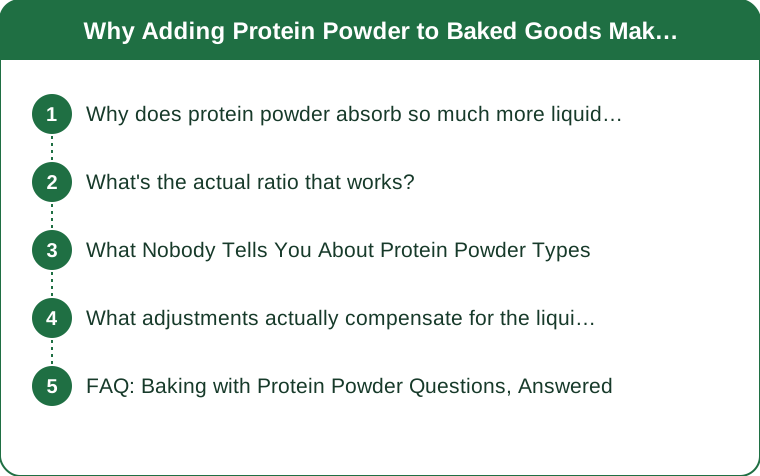
Why does protein powder absorb so much more liquid than flour?
Protein powders, especially whey and casein-based ones, have a much higher protein concentration and finer particle structure than flour, which means they bind and absorb liquid more aggressively during mixing and baking than the starch-heavy structure of regular flour. Flour’s starch granules gelatinize during baking in a way that traps moisture and creates a tender crumb; protein powder doesn’t replicate this starch function, which is the core reason a straight swap dries out the result.
What’s the actual ratio that works?
Replacing 15-25% of the total flour weight with protein powder, not more, generally preserves reasonable texture, especially in denser bakes like muffins, pancakes, or protein bars where a slightly firmer texture is more forgiving than in a delicate cake. Beyond 25-30% replacement, texture problems become increasingly difficult to fully correct even with liquid adjustments, since the fundamental starch-to-protein ratio has shifted too far.

What Nobody Tells You About Protein Powder Types
Here’s a detail recipes rarely specify clearly: different protein powder types behave differently in baking, not just by brand but by base ingredient. Whey protein isolate tends to dry out baked goods faster than whey protein concentrate, which retains slightly more natural moisture and fat. Plant-based protein blends (pea, rice) often have a grittier texture that shows up more in delicate bakes than in denser ones. Testing a recipe with the specific type you have on hand matters more than trusting a generic “add protein powder” instruction not written for your specific product.
What adjustments actually compensate for the liquid absorption?
- Add 1-2 extra tablespoons of liquid (milk, water, or a liquid sweetener) per 1/4 cup of protein powder used, as a starting point to retest and adjust from
- Increase fat content slightly (a bit more oil, butter, or yogurt) since fat helps counteract the dryness protein powder introduces
- Reduce baking time slightly and check doneness earlier than the original recipe suggests, since protein-powder-modified batters can dry out further if baked to the same time as the original
- Let baked goods cool completely before judging texture, since protein-powder bakes often firm up and can seem more done than they are while still warm
FAQ: Baking with Protein Powder Questions, Answered
Does the type of baked good matter for how well protein powder works?
Yes — denser items (muffins, pancakes, protein bars, dense cookies) tolerate protein powder substitution better than delicate items (angel food cake, light sponge cakes) where structure is more fragile.
Can I use protein powder for 100% of the flour in a recipe?
Generally not successfully for traditional baked goods — most “protein pancake” or “protein muffin” recipes that use protein powder as the primary dry ingredient are specifically formulated recipes built around that ratio from scratch, not a simple substitution into a normal recipe.
Why did my protein baked goods turn out gummy instead of dry?
This usually means too much liquid was added to compensate, overcorrecting the dryness — finding the right liquid balance often takes one or two test batches with small adjustments rather than getting it exactly right on the first try.
TL;DR:
- Protein powder absorbs far more liquid than flour and lacks flour’s moisture-trapping starch structure
- Replacing only 15-25% of total flour, not more, keeps texture reasonably close to a normal bake
- Different protein powder types (whey isolate vs. concentrate vs. plant-based) behave differently — test your specific one
- Add extra liquid and a bit more fat to compensate, and check doneness earlier than the original recipe suggests
Keep Reading
This article is for general informational purposes only and is not medical advice. Always consult a qualified health professional for guidance specific to you.