The Oven Temperature Mistake That's Sabotaging Your Healthy Baking
Quick Answer: Home ovens are commonly off by 25-50°F from their dial setting, and healthy baking swaps (less sugar, alternative flours) are far less forgiving of temperature error than traditional recipes. A $10 oven thermometer, checked once, often explains dense or gummy results that seem like a recipe or ingredient problem.
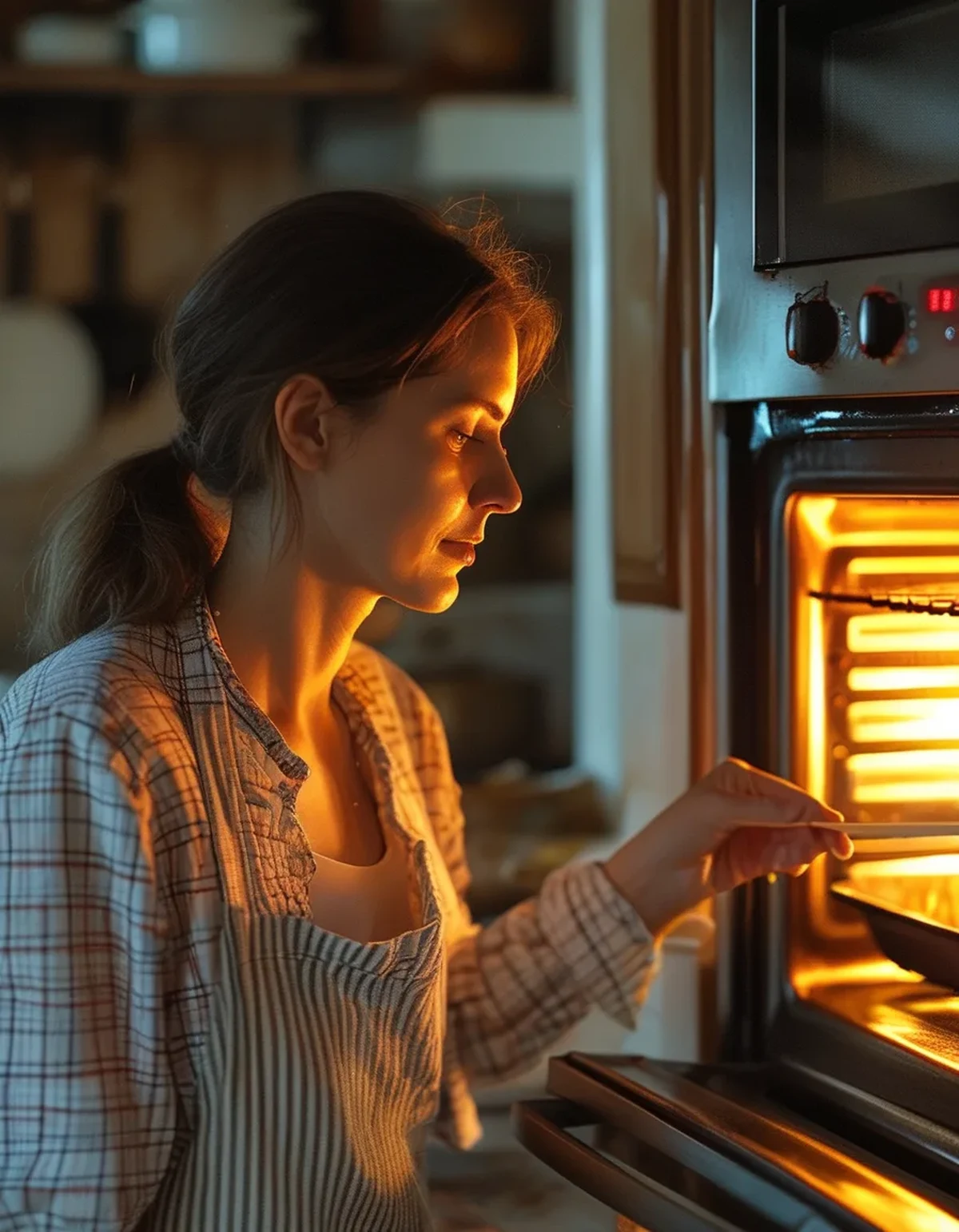
You’ve followed the healthy baking recipe exactly — same flour swap, same reduced sugar, same bake time — and it still comes out dense in the middle. The recipe might be fine. Your oven might just be lying to you.
Why do home ovens run inaccurate in the first place?
Most home oven thermostats are calibrated at the factory and can drift over years of use, commonly landing 25-50°F off from the dial setting by the time an oven is a few years old. A dial set to 350°F might actually be running at 320°F or 385°F — enough of a gap to meaningfully change how baked goods set.
Why does this matter more for healthy baking specifically?
Traditional recipes have more sugar and fat, which act as buffers — they slow moisture loss and help structure set even across a temperature range. Healthy swaps (applesauce or banana for oil, reduced sugar, alternative flours like almond or oat) have less structural buffer, so the same 30°F temperature error that a traditional recipe shrugs off can leave a healthy version underbaked and gummy in the center or dried out on the edges.

How do you actually check your oven’s real temperature?
Place an inexpensive oven thermometer (not the built-in digital display) on the middle rack, set your oven to 350°F, and let it fully preheat plus an extra 15 minutes. Read the thermometer, not the dial. If it’s off by more than 15-20°F, adjust your dial setting accordingly for future bakes — set to 380°F if your oven runs 30°F cool at a 350°F setting, for example.
5 Mistakes That Compound the Oven Temperature Problem
1. Opening the oven door repeatedly to check — each opening drops internal temperature by 25-50°F temporarily, compounding an already-inaccurate baseline. 2. Not preheating long enough — many ovens beep ‘ready’ before actually stabilizing at the set temperature. 3. Using glass or dark pans without adjusting — both bake hotter than the recipe assumes, layering a second temperature error on top of the oven’s own inaccuracy. 4. Placing the pan on the wrong rack — heat distribution varies significantly between top, middle, and bottom positions. 5. Never re-checking oven calibration over years — thermostats drift further with age, so a check that was accurate 3 years ago may not be anymore.
FAQ: Healthy Baking Oven Temperature Questions, Answered
How often should I check my oven’s actual temperature?
Once every 1-2 years, or immediately if you notice a pattern of undercooked or overcooked results across multiple different recipes.
Can I recalibrate my oven myself?
Many ovens have a hidden calibration setting in their digital menu (check your manual) that lets you offset the dial to match true temperature — otherwise, adjusting your target dial setting manually works just as well.
Does an oven thermometer really matter if I’m just baking cookies, not health-focused recipes?
It matters less for very forgiving recipes but is still useful — but the effect is far more noticeable in reduced-sugar, alternative-flour healthy baking, which is why this issue disproportionately shows up in that category.
TL;DR:
- Home ovens commonly run 25-50°F off from their dial, and drift worse with age
- Healthy swaps (less sugar, alt flours) have less buffer for temperature error than traditional recipes
- A $10 oven thermometer, checked once, often solves what looks like a recipe problem
- Avoid opening the door repeatedly and adjust for glass/dark pans, which bake hotter
Keep Reading
This article is for general informational purposes only and is not medical advice. Always consult a qualified health professional for guidance specific to you.